A useful date outfit fits the venue, the weather and the person wearing it. For drinks, that might mean good jeans and a sweater; for a daytime plan, comfortable trousers and shoes you can walk in; for a special dinner, a blouse or dress you already enjoy wearing. None of those formulas requires buying an entirely new wardrobe.
Relationship stage can give you ideas, but it does not create a dress code. A third date can be formal, and a long-term couple's anniversary can be casual. Start with the plan, borrow a simple outfit formula, and settle the heels-or-flats question according to what works for your body and your evening.
The aim is to finish getting dressed and then think about the date. If an outfit needs constant adjusting, hurts to sit in or leaves you cold on the way home, change that part before worrying about whether it looks impressive enough.
The celebrity formulas are inspiration, not requirements
In Who What Wear's interview about date dressing, Morgan Stewart McGraw suggests denim, a V-neck sweater and heels for drinks; textured trousers for a casual daytime date; and a sheer blouse with black trousers for a dressier dinner. Her long-term-date ideas include knitwear, skirts and simple layering. Her preference for heels is a personal style opinion, not evidence that one shoe improves a date.
You can take the useful part of a formula—the balance of a relaxed piece and a dressier piece—without adopting every detail. A flat shoe, a higher neckline, a longer skirt or a different fabric can make the idea feel more like you.
Start with the plan, not the relationship label
Before choosing clothes, find out whether you are sitting indoors, walking between places, spending time outside or likely to change venues. You do not need a secret itinerary, but you can ask for enough information to dress comfortably.
“Is this mostly sitting down, or should I wear walking shoes?” is a practical question. “How dressed up is the place?” is another. If the plan is a surprise, the person organizing it can still tell you the general dress level, expected temperature and whether your usual mobility needs will be accommodated.
Check the part of the evening that is easiest to overlook: waiting outside, reaching transit, carrying a coat, and getting home. A beautiful outfit can include warm socks, a practical outer layer and a bag that holds what you need. Those choices belong in the plan rather than being last-minute additions you resent.
| Plan | Start with | Make it yours |
|---|
| First drinks | Jeans, a sweater, a shoe you like | Change neckline, denim shape and shoe height |
| Daytime date | Textured trousers, a knit, practical shoes | Add layers for walking or changing temperature |
| Dinner a few months in | Tailored trousers and a blouse | Choose a lined or opaque option if preferred |
| A dress date | A simple dress and boots | Adjust length, tights and outerwear for comfort |
| Long-term date night | A favorite everyday piece plus one dressier detail | Rewear something with a good memory attached |
First drinks: denim and a sweater
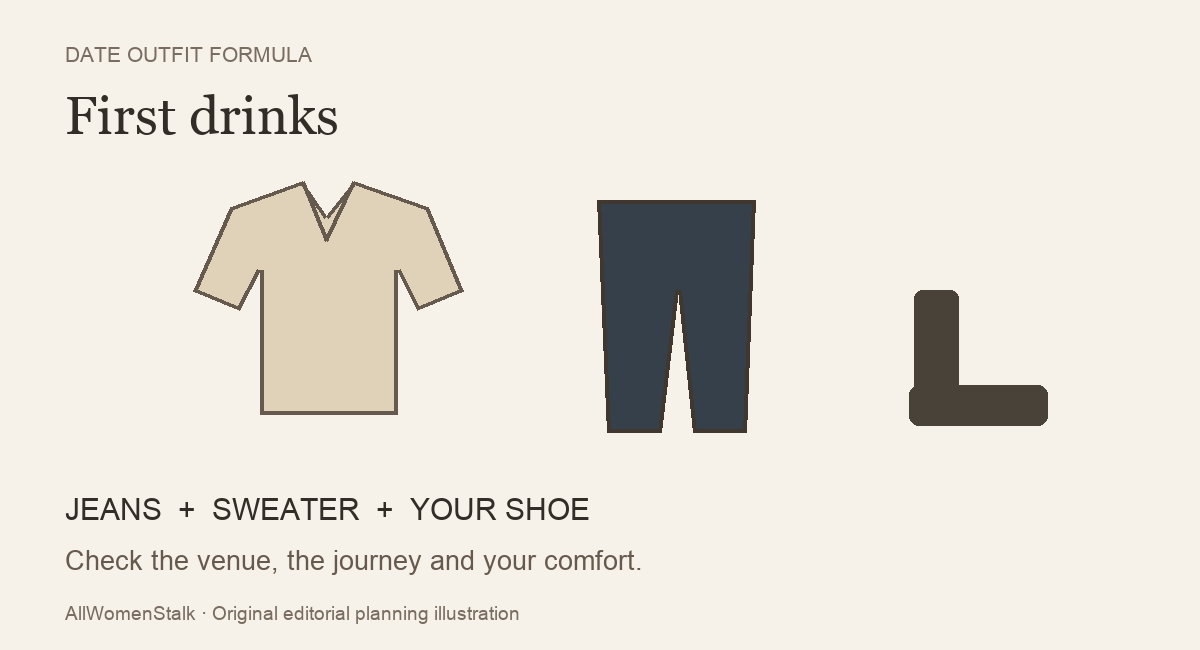
Start with the jeans that fit comfortably when you sit down. Add a sweater with a neckline and texture you enjoy, then choose shoes for the actual journey. Dark denim can be one option, but the best pair is the one you are not constantly pulling into place.
Try the full outfit while seated, with the coat you intend to bring. Check whether a tucked sweater feels bulky, whether the waistband stays comfortable and whether the bag is easy to carry. These small checks are more useful than deciding that a first date must look effortless while ignoring how the clothes feel.
If the venue is more formal, swap denim for trousers rather than rebuilding the outfit from scratch. If it is a casual bar, you can keep the whole look relaxed and use an earring, a lip color or a favorite jacket as the detail that feels like going out.
A daytime date: texture and practical layers
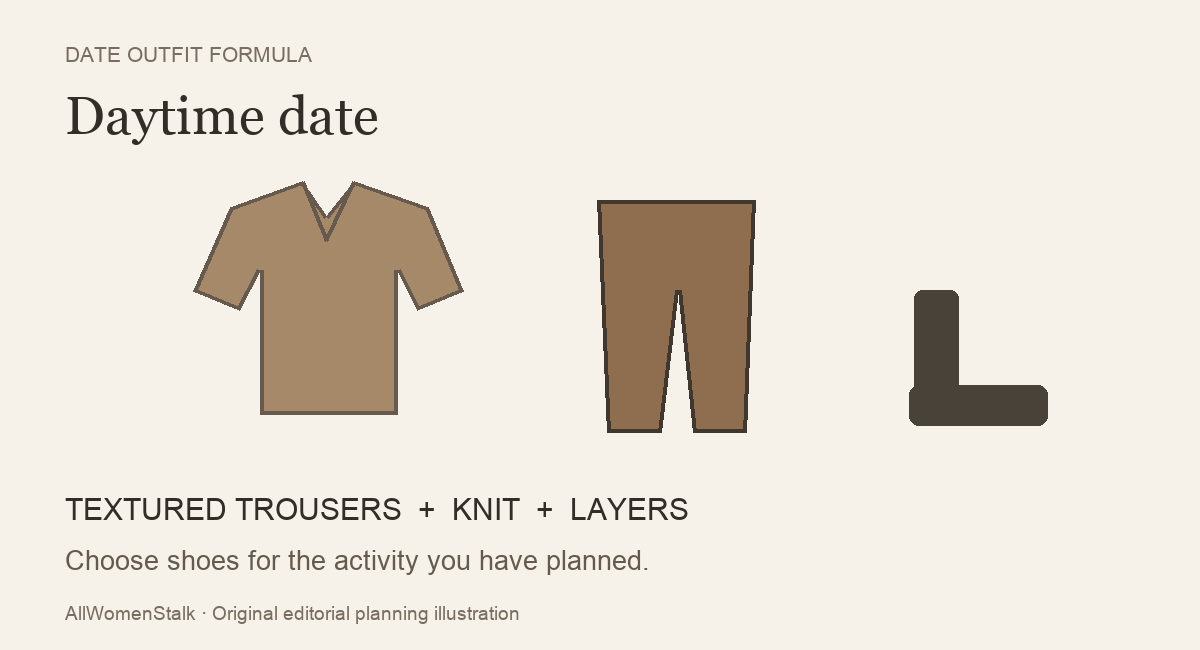
Corduroy, a knit or another textured piece can make a simple outfit feel considered. Choose the fabric for the conditions rather than assuming a daytime plan will be warm or inactive. A layer you can remove comfortably gives you options if the date moves from outside to a heated room.
For a walk, museum visit or lunch, decide which shoes you would wear if the activity were with a friend. That is a useful reality check. You can enjoy dressing up without choosing footwear that stops you participating in the plan.
A second or third date is also a good moment to wear something that reflects your actual life. If you love bright color, practical boots or loose trousers, there is no deadline by which you are supposed to trade them for a different dating persona.
A dressier dinner: trousers and a blouse
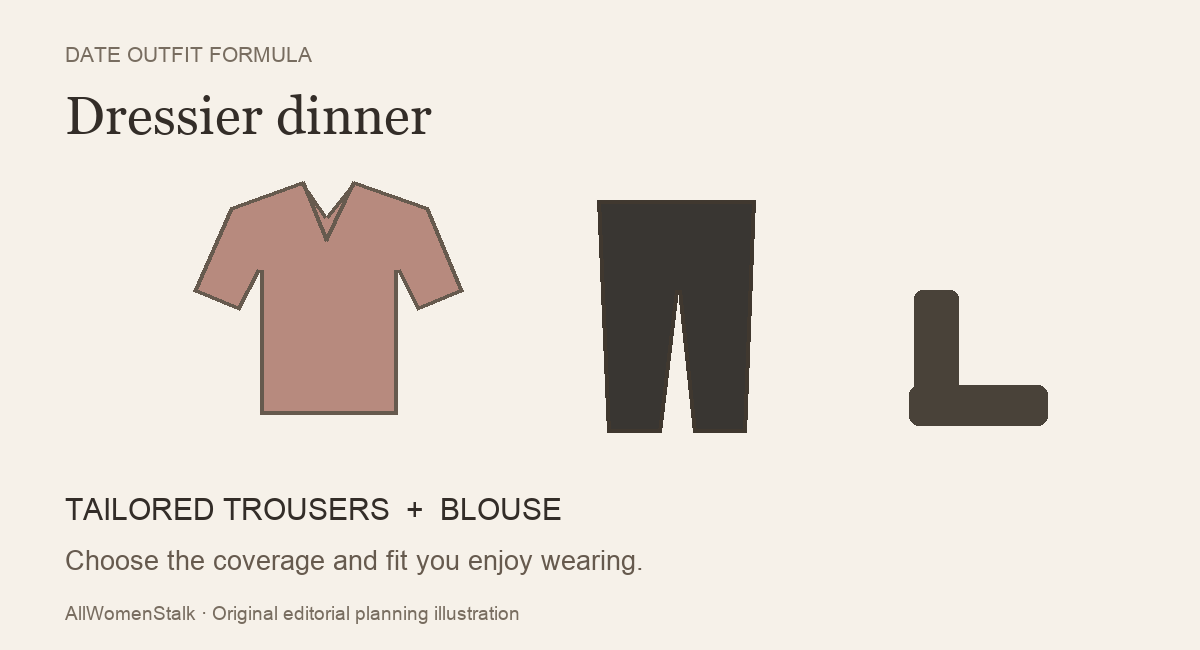
Tailored trousers and a blouse are an easy alternative to a dress. A sheer fabric is optional; choose a lining, a camisole or a fully opaque blouse if that is more comfortable. Check the outfit in ordinary light and seated at a table so you know how it behaves.
Keep the rest simple if the blouse is the focal point. You might use a quiet bag and familiar shoes, or choose a favorite necklace if the neckline leaves room. You do not need a different statement piece in every part of the outfit.
Ask about any venue dress code before arriving. A rule from the restaurant and an opinion from a fashion interview are different things. You can decide whether you want to attend a venue with that code rather than discovering it at the door.
A dress date: one piece, fewer decisions
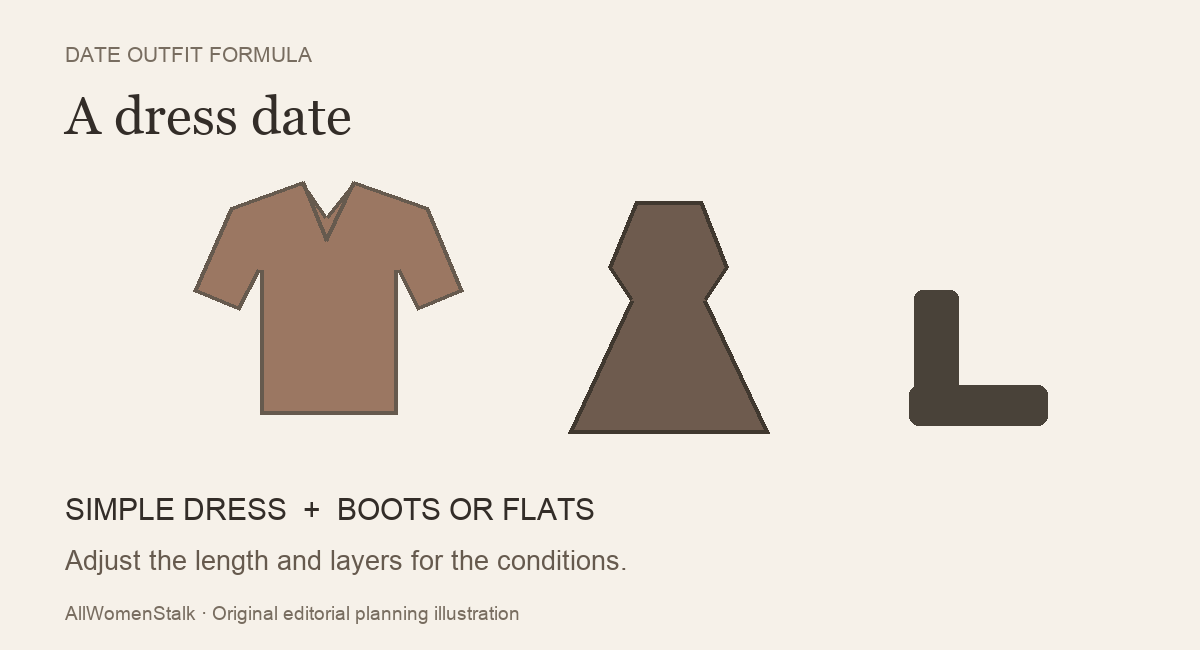
A simple dress can make getting ready easier. Choose a length and shape that lets you sit, walk and manage stairs comfortably. Add tights or another layer when appropriate, and test them together before the date rather than assuming every fabric will behave the same way.
Boots, flats or heels can all be part of the formula. Start with the shoes you want or need to wear, then choose the dress around them. That can be easier than buying a dress first and feeling forced into a shoe you dislike.
Years together: make an ordinary favorite feel intentional
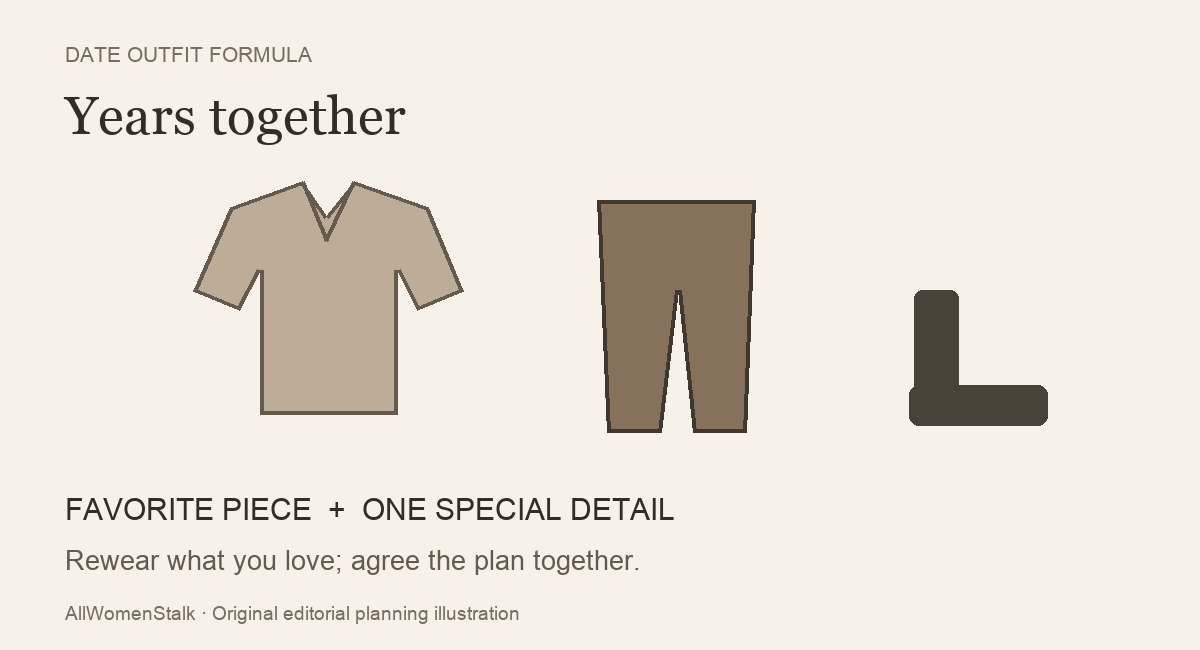
Long-term date night does not require a more elaborate outfit to prove you still care. Rewear something you like and change one element: the trousers, the jewelry, the coat, the hair or the shoe. The point is to mark the evening in a way you enjoy.
You can also decide together that the date will be casual. If one person is planning a fancy dinner and the other expects a neighborhood walk, clarify that before either gets dressed. A shared plan is more useful than expecting clothes to communicate an unspoken level of effort.
Heels or flats?
Wear heels if you like them and they suit the activity. Wear flats if you prefer them or need them. A block heel, a low boot, a loafer or a clean trainer can each make sense in a different setting; none determines whether your interest in the date is serious.
If you choose a heel, try the actual walking route in mind: uneven pavements, stairs, standing room and the journey home. Bring a practical alternative if that helps you enjoy the evening. You do not need to explain a footwear decision as a failure to meet someone else's idea of attractive.
The same principle applies to necklines, shapewear and skirt lengths. You can dress in a way that feels expressive without accepting discomfort as proof that you made an effort.
Outfit mistakes worth avoiding
The most useful checks are logistical: clothes that do not suit the activity, a new item you have not tried sitting in, or no warm layer for the journey. Our first-date fashion mistakes guide offers more ideas, but use your own needs as the final filter.
Do a quick movement check before leaving: sit, reach, walk and put on the coat. Pack the essentials you need to get home. If one part keeps distracting you, swap it. An outfit does not need to be ambitious to be good.
Avoid trying to make clothing deliver a promise it cannot make. A look does not guarantee a second date, reveal your personality accurately or make another person treat you well. You can use clothes to express yourself and still communicate your relationship intentions directly.
Frequently asked questions
What should I wear for first drinks?
A reliable starting point is jeans or trousers, a top you like and shoes suited to the venue and journey. Adjust the dress level to the actual plan.
Do I need heels?
No. They are a style option. Comfort, access needs, the weather and what you want to wear are better reasons for choosing your shoes.
What changes by the third date?
There is no mandatory change. Use the activity and your own preferences to guide the outfit rather than dressing to signal a particular relationship milestone.
What is a good long-term date-night outfit?
Try a favorite piece with one detail that makes the evening feel special. It can be casual or dressy if you are both clear about the plan.
What should I avoid?
Avoid anything that prevents you enjoying the activity or leaves you unprepared for the weather. You do not need to avoid an item simply because an online rule calls it wrong for a date.