L’OBJET’s Delphes Eau de Parfum Is the Mediterranean’s Most Sophisticated Secret Yet …
Luxury fragrance rarely introduces a truly new ingredient. More often, it reimagines familiar materials with exceptional craftsmanship, refining traditions rather than rewriting them. Delphes Eau de Parfum accomplishes something genuinely remarkable by placing an entirely unprecedented ingredient at its center - Olive Grignon Absolute, a material never before used in modern perfumery. The result is not another Mediterranean perfume, but an entirely new olfactory language that feels at once ancient and astonishingly contemporary.
Created in collaboration with legendary Master Perfumer Jean-Claude Ellena, Delphes Eau de Parfum continues an artistic dialogue that has always defined Ellena’s work: restraint over excess, transparency over ornament, and emotion expressed through exquisite simplicity. It is a fragrance that whispers rather than performs, proving once again that true luxury has little interest in announcing itself loudly.
In an era where fragrances often compete through overwhelming sweetness, theatrical projection, or endless ingredient lists resembling ambitious grocery receipts, Delphes arrives with enviable confidence. It trusts the wearer. More importantly, it trusts silence. That confidence may be its greatest luxury.
1. A Journey to Delphi Without Boarding a Plane
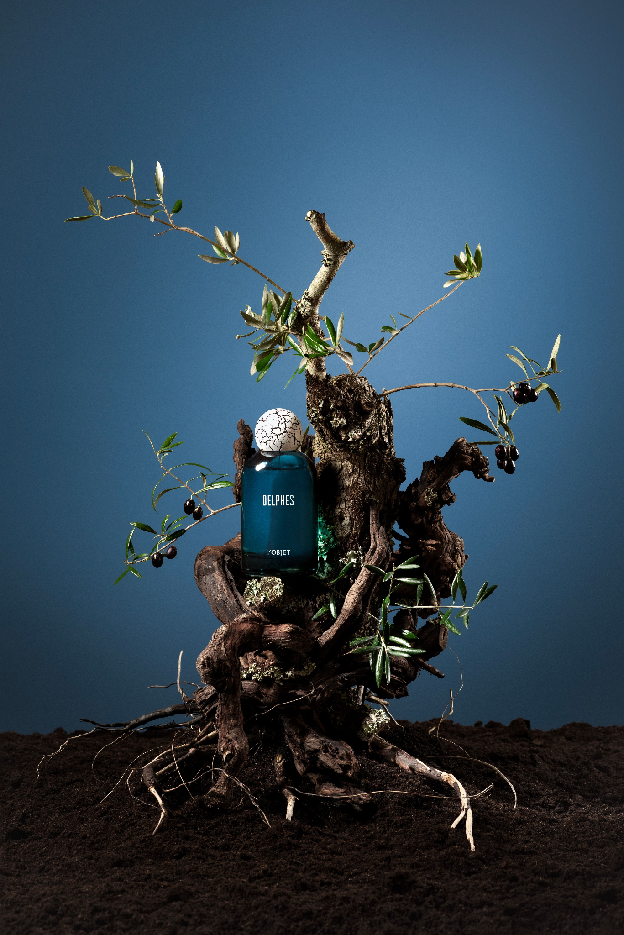
There are destinations that exist geographically, and there are destinations that seem to exist somewhere between mythology and memory. Delphi belongs firmly to the latter.
Nestled between dramatic mountains and endless olive groves overlooking the Gulf of Corinth, Delphi has occupied a singular place in Greek civilization for thousands of years. It was once believed to be the center of the world, home to Apollo’s oracle, where rulers and philosophers sought wisdom before making decisions capable of altering history.
Such places possess an atmosphere that cannot easily be photographed. The air carries minerals from ancient stone, aromatic herbs warmed beneath relentless Mediterranean sunlight, towering cedar, dry earth, weathered wood, and the unmistakable scent of olive trees that have quietly observed civilizations rise and disappear.
Rather than reconstructing this landscape literally, Delphes Eau de Parfum translates its emotional architecture.
This distinction matters. The fragrance does not smell like a tourist itinerary. It smells like permanence.
2. The Ingredient That Changes Everything
Every few decades, perfumery discovers a material capable of shifting creative possibilities. Sometimes it is an unexpected extraction. Occasionally it is a technological breakthrough. More rarely still, it is an ingredient hiding in plain sight for centuries. For Delphes, that ingredient is Olive Grignon Absolute.
Unlike traditional olive accords that suggest fresh fruit or leafy greenness, Olive Grignon Absolute is created from the complete pressing of the olive branches, leaves, and fruit. Rather than isolating one facet of the olive tree, it preserves its entire aromatic identity.
The effect is astonishingly multidimensional. There is the resinous warmth of ancient wood.
The invigorating freshness of green leaves fluttering beneath Mediterranean winds. A restrained fruitiness that never becomes edible.
And beneath everything rests a distinctive mineral depth, as though sun-heated stone itself had somehow learned to breathe.
It is difficult to compare Olive Grignon Absolute with anything already familiar because, quite simply, perfumers have never used it before. That originality immediately distinguishes Delphes Eau de Parfum within an increasingly crowded luxury fragrance market, where genuine innovation has become surprisingly rare.
Perhaps that is why the fragrance feels simultaneously timeless and modern. It introduces something entirely unfamiliar while somehow awakening memories we cannot quite place.
3. Jean-Claude Ellena’s Quiet Mastery
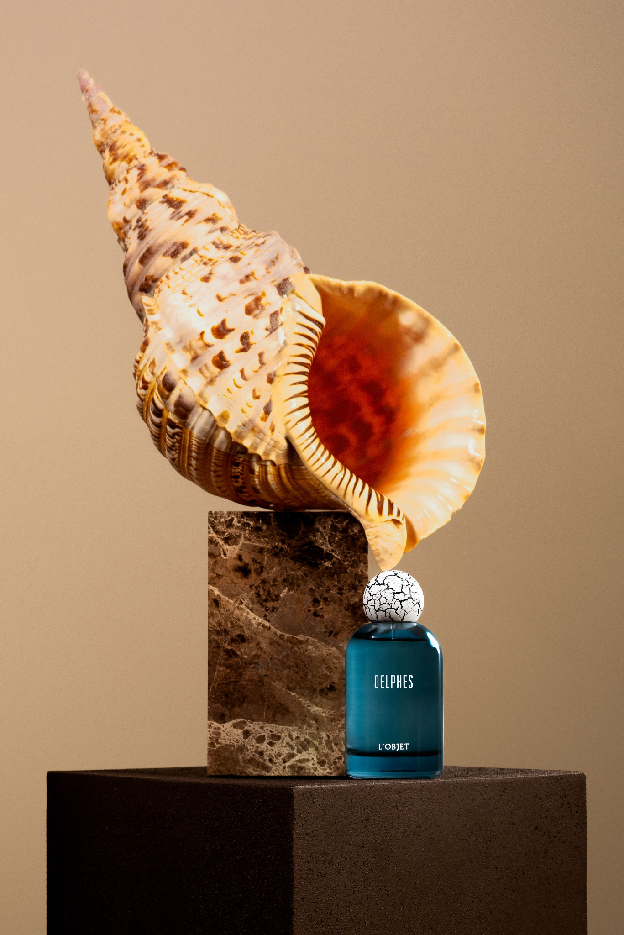
Few contemporary perfumers understand elegance with the precision of Jean-Claude Ellena.
His compositions have never relied on complexity for complexity’s sake. Instead, they reveal remarkable discipline, allowing carefully chosen materials to breathe naturally without overwhelming one another. His fragrances often resemble beautifully written prose: every word necessary, every unnecessary adjective politely shown the exit. Delphes exemplifies this philosophy perfectly.
Rather than burying Olive Grignon Absolute beneath elaborate embellishments, Ellena constructs an architectural framework that elevates its singular beauty.
Black pepper opens the fragrance with refined brightness rather than dramatic spice, immediately joined by the cool, leafy clarity of violet leaf. Together they create an opening that feels luminous rather than sparkling - sophisticated instead of exuberant.
As the composition unfolds, cedarwood establishes an elegant vertical structure, giving the fragrance remarkable clarity while supporting the olive wood accord with understated confidence. Patchouli contributes subtle depth without introducing excessive darkness, preserving the fragrance’s extraordinary transparency.
Finally, sandalwood and oakmoss settle gently beneath the composition, adding warmth, texture, and a quietly enduring presence that lingers beautifully without dominating a room. It is architecture expressed through scent.
Every note exists because it has something meaningful to contribute. Nothing feels decorative.
4. Fresh Without Becoming Predictable
The word “fresh” has suffered considerably within modern perfumery.
Too often it has become shorthand for aggressively citrus openings, aquatic clichés, or compositions determined to remind everyone of freshly laundered white shirts.
Delphes Eau de Parfum proposes an entirely different understanding of freshness.
Here, freshness emerges through natural materials, mineral transparency, cool woods, and living greenery rather than obvious citrus effects. It resembles stepping into an ancient olive grove shortly after sunrise, where cool shadows still linger beneath branches while the first warmth of the Mediterranean day begins to illuminate the landscape.
This balance between freshness and woodiness gives Delphes extraordinary versatility.
It feels appropriate during summer without relying on conventional seasonal tropes.
Equally, it possesses sufficient structure and warmth to remain compelling throughout autumn and beyond.
The fragrance resists categorization because nature itself rarely conforms to marketing departments.
5. The Luxury of Understatement
Luxury has entered an interesting phase. Increasingly, refinement lies not in displaying more, but in expressing less with greater confidence. The most elegant homes are often the least cluttered. The finest tailoring appears effortless. The best jewelry rarely requires introductions. Fragrance has been following the same evolution.
Rather than demanding attention across elevators, restaurants, and unsuspecting conference rooms, sophisticated perfumes increasingly remain intimate, rewarding those invited close enough to discover them.
Delphes Eau de Parfum embodies precisely this philosophy.
It never attempts theatrical performance. Instead, it creates an aura.
Someone may notice it while leaning closer during conversation. Someone else may catch its mineral woods lingering softly upon a linen collar hours later.
Both encounters feel infinitely more memorable than overwhelming projection ever could.
After all, mystery has always possessed considerably better manners than exhibitionism.
6. Wearing Landscape Instead of Perfume
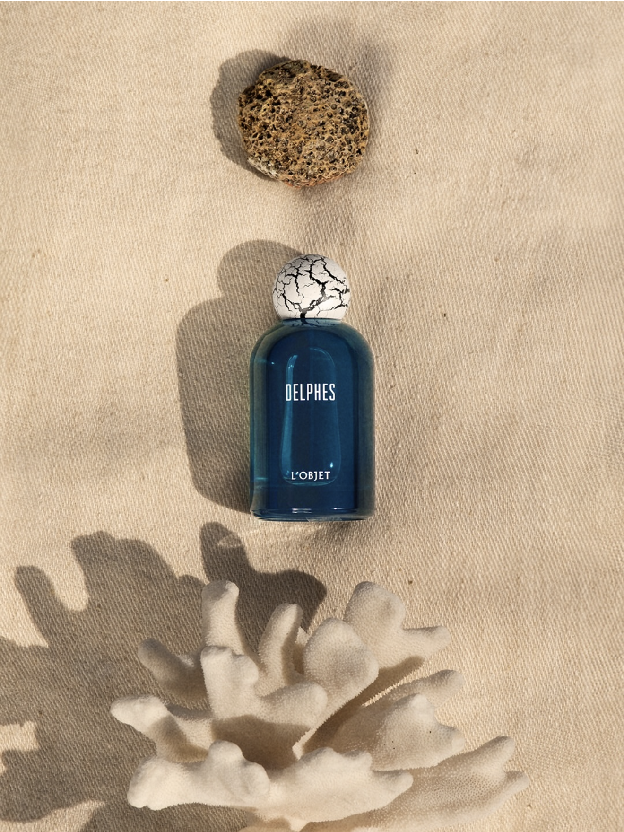
Some fragrances evoke flowers. Others suggest desserts. Many successfully recreate cocktails. Delphes chooses something considerably more ambitious.
It evokes geography. More specifically, it captures an entire ecosystem where olive trees, cedar, mineral stone, Mediterranean winds, and ancient mythology coexist harmoniously. Wearing it feels less like applying perfume and more like carrying an atmosphere that gradually reveals itself throughout the day.
There is an almost meditative quality to this experience.
The fragrance evolves patiently, encouraging repeated attention without ever insisting upon it.
Each return reveals another nuance: a trace more cedar, a touch more green olive wood, subtle pepper, creamy sandalwood, or quiet oakmoss emerging almost imperceptibly beneath everything else.
This continual unfolding keeps Delphes intellectually engaging long after initial application. It is not a fragrance one understands immediately. Fortunately. The finest conversations rarely conclude after the opening sentence.
7. Why Delphes Eau de Parfum Belongs on Every Fragrance Lover’s Radar
Exceptional fragrances often introduce us to entirely new ways of perceiving familiar materials. Delphes Eau de Parfum achieves exactly that through the groundbreaking use of Olive Grignon Absolute, transforming the olive tree from quiet background scenery into the emotional heart of an extraordinary composition.
Combined with Jean-Claude Ellena’s unmistakable gift for luminous minimalism, the result feels less like another luxury perfume launch and more like an artistic statement about nature, memory, and refined restraint.
In a marketplace increasingly saturated with louder, sweeter, and ever more elaborate compositions, Delphes offers something infinitely rarer. It offers stillness. And in today’s world, stillness may be the greatest luxury of all.
Delphes Eau de Parfum - priced at $265 USD - is not simply another beautiful fragrance inspired by the Mediterranean. It is a meditation on olive groves shaped by centuries of sunlight, on sacred landscapes suspended between earth and sky, and on the quiet confidence that defines true sophistication. For those searching for a luxury fragrance unlike anything else in contemporary perfumery, Delphes Eau de Parfum may well become this year’s most compelling discovery - one that proves innovation need not shout to be unforgettable.